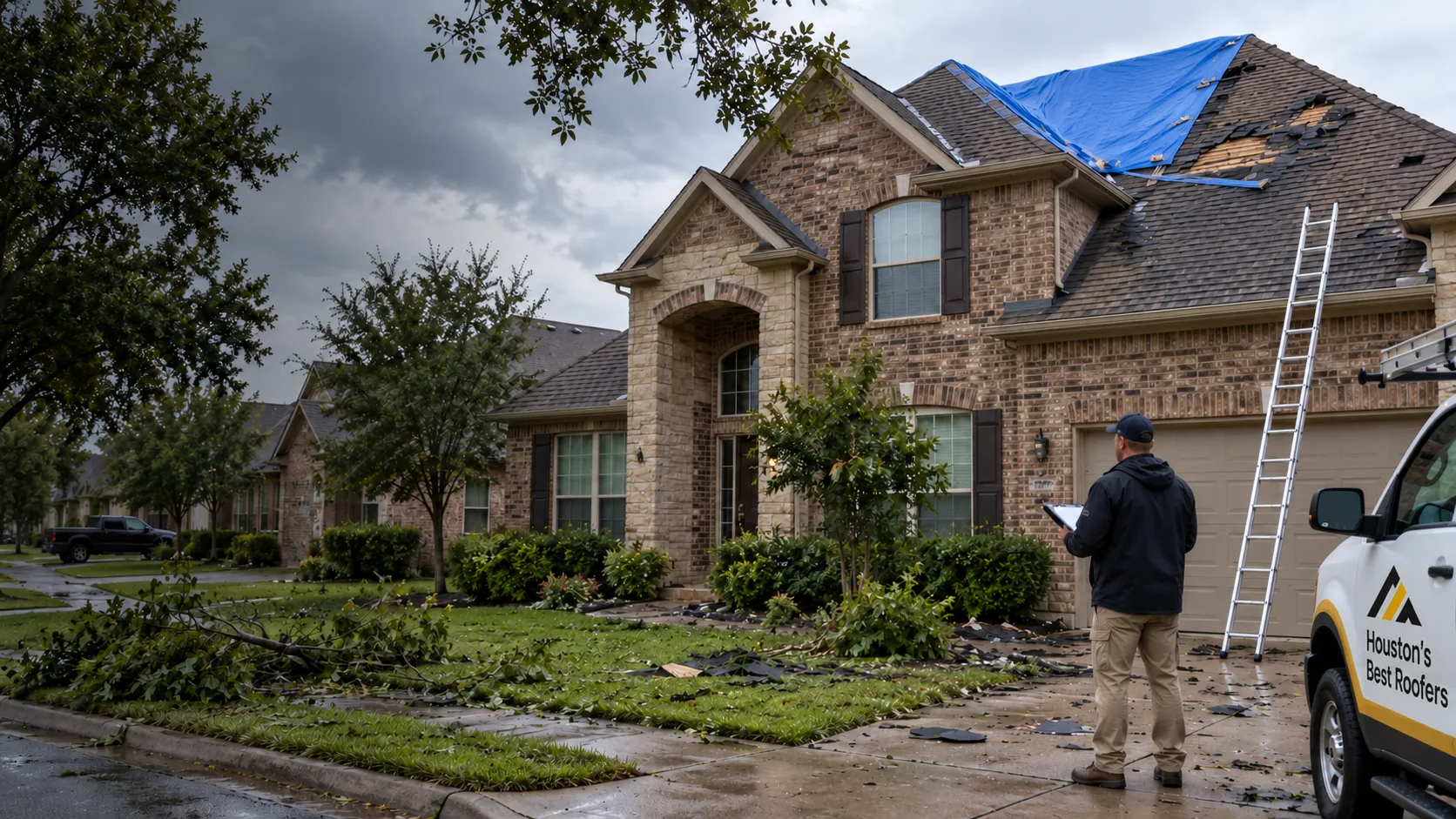
Storm damage isn't always obvious from the ground. Missing shingles and an active leak are easy to spot, but wind can crease or loosen shingles and hail can damage roofing components without immediately causing an interior leak. A proper inspection determines what was damaged, how extensive it is, whether water has reached the roof system or decking, and whether a repair or a replacement is the right next step—so you're deciding based on what's actually there, not a guess.
We look at the whole roof and document what the storm actually affected—not just the obvious spots.
You'll see the damaged areas for yourself, with a clear explanation of how extensive the problem is.
If a repair will do, we'll say so. If replacement is the better call, we'll explain why—no pressure.

Have questions after a storm? Contact our team or see recent work in our project gallery →
After severe weather, these are the things worth watching for. If you notice any of them, it's a good time to have the roof inspected before the next storm makes it worse.
Strong winds can loosen, lift, crease, or completely remove shingles and expose the roof to water.
Hail can bruise shingles, loosen protective granules, and damage vents, flashing, and other roof components.
Water entering during or after a storm can indicate damage to shingles, flashing, valleys, vents, or penetrations.
High winds and debris can loosen or damage flashing around chimneys, walls, valleys, and roof transitions.
Roof vents, pipe boots, and other penetrations can crack, loosen, or become vulnerable during severe weather.
Tree limbs and windblown debris can puncture roofing materials or damage decking and structural components.
A few sensible steps in the first day or two can limit further damage and make the path forward clearer.
If water is entering the home, take reasonable steps to limit additional damage. Emergency tarping may be appropriate when it can be done safely.
Photograph visible exterior damage and any interior water intrusion. Do not climb onto a damaged or wet roof yourself.
Have the roof inspected so you understand the location and extent of the damage before deciding what comes next.
Depending on the findings, the right solution may be a targeted repair, a larger repair, or replacement. If insurance may apply, review your policy and deductible before filing a claim.
Our goal is to determine what was actually damaged and recommend the appropriate solution—repair or replacement.
Houston roofs face a mix of severe weather, and each type stresses a roof in its own way.
High winds can lift shingles, break adhesive seals, crease tabs, loosen flashing, and expose vulnerable areas of the roof.
Hail can damage shingles and roofing components even when the roof looks intact from the ground. Severity depends on hail size, wind, roofing material, and roof condition.
Wind-driven rain can find weaknesses around flashing, valleys, vents, penetrations, and previously damaged roofing materials.
When storm damage leaves part of a roof exposed or water is actively entering the home, temporary protection may be needed before permanent repairs can be completed. The goal is simple: limit further damage until the roof can be properly repaired.
Cover exposed or vulnerable roof areas when it can be done safely.
Temporary protection helps limit additional water getting into the home.
We inspect the underlying damage before completing a permanent repair.
Sometimes a targeted repair restores the roof; sometimes the damage points toward replacement. Here's how the two generally compare—though only an inspection can tell you which applies to your roof.
We'll explain what we find and why we recommend a repair or a replacement.
Homeowners insurance may cover certain sudden storm-related roof damage, depending on the cause of loss, your policy terms, exclusions, roof condition, deductible, and your insurer's determination. We can inspect the roof and document the damage we observe—the homeowner and the insurance company ultimately determine how a claim is handled and what coverage applies.
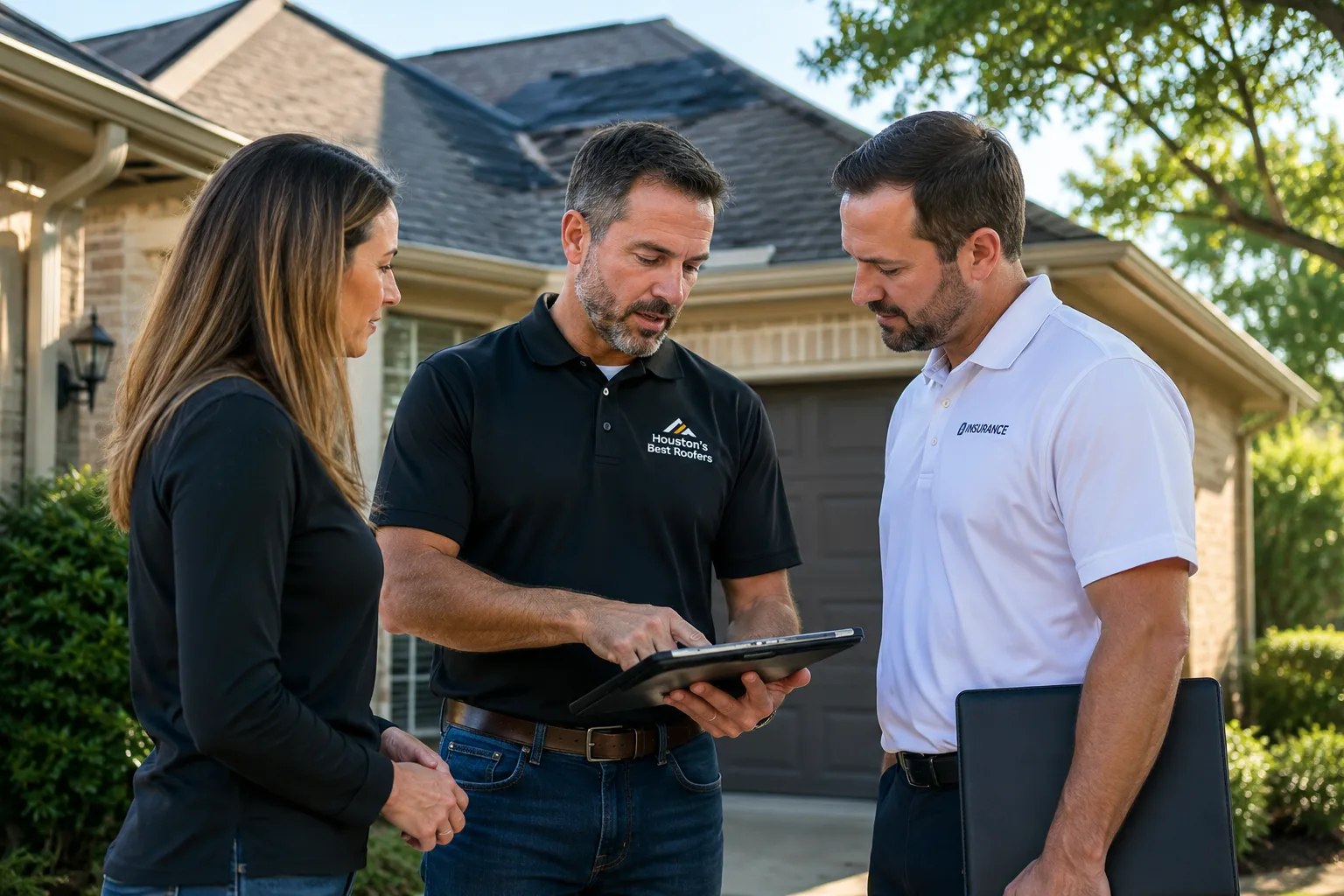
We inspect the roof and document visible damage and the affected areas.
Check your deductible and coverage before deciding whether filing a claim makes sense.
If you file a claim, your insurance company will evaluate the loss and determine coverage under your policy.
From the first inspection to the finished repair, you'll always know what to expect—no surprises and no pressure.
We inspect the roof and identify visible storm damage, leaks, and affected roofing components.
We'll show you the damaged areas and explain the extent of the problem.
We'll explain whether the roof can be repaired or whether replacement should be considered.
Once you approve the scope, we'll complete the agreed roofing work and inspect the finished project.
Storm damage to your roof?
Schedule a free inspection and get a clear, written recommendation before any work begins.
Houston's Best Roofers provides storm damage roof repair throughout Houston and surrounding communities, including Harris and Fort Bend counties.
Book a free inspection with a local Houston roofing expert—we'll document what we find and explain your options.
Some signs are obvious—missing shingles, an active leak, or debris on the roof—but a lot of storm damage isn't visible from the ground. Wind can crease or loosen shingles and hail can bruise shingles and damage vents and flashing without causing an immediate leak. The reliable way to know is a roof inspection that documents what was actually affected.
Take reasonable steps to limit interior damage—move belongings and catch water where you safely can—and photograph the affected areas. Don't climb onto a wet or damaged roof yourself. Schedule an inspection promptly; if part of the roof is exposed, temporary tarping may be appropriate to protect the home until permanent repairs can be made.
Yes. High winds can break the adhesive seals, crease or lift shingles, and loosen flashing even when nothing is obviously missing. That kind of damage leaves the roof more vulnerable to the next storm, which is why a close inspection matters.
Hail can bruise shingles, knock loose the protective granules, and dent or crack vents, flashing, and other components. It isn't always visible from the ground, and severity depends on hail size, wind, the roofing material, and the roof's condition. An inspection documents whether hail actually affected the roof.
Often, yes—if the damage is limited to a smaller area and the surrounding roof and decking are still sound, a targeted repair can restore it. Widespread damage across multiple roof slopes, or a roof already near the end of its life, may point toward replacement. We'll know which makes sense after we inspect the roof.
It's usually helpful to have the roof inspected first so you understand what was actually damaged and roughly what's involved. From there you can review your policy and deductible and decide whether filing a claim makes sense for your situation. Whether to file a claim is your decision.
It depends. Coverage varies with the cause of loss, your policy terms and exclusions, the roof's condition, your deductible, and your insurer's determination. We can inspect and document the visible damage, but your insurance company ultimately determines what is covered under your policy.
Sooner is better—especially if there's an active leak or visible exterior damage—so small problems don't get worse before the next round of weather. If water is actively entering the home, treat it as urgent and take safe steps to limit the damage until the roof can be inspected.
Storm damage to your roof? We'll inspect it, document what we find, and help you understand the right next step for your home—no pressure, no obligation.
Your free inspection request is in. We'll call you shortly.