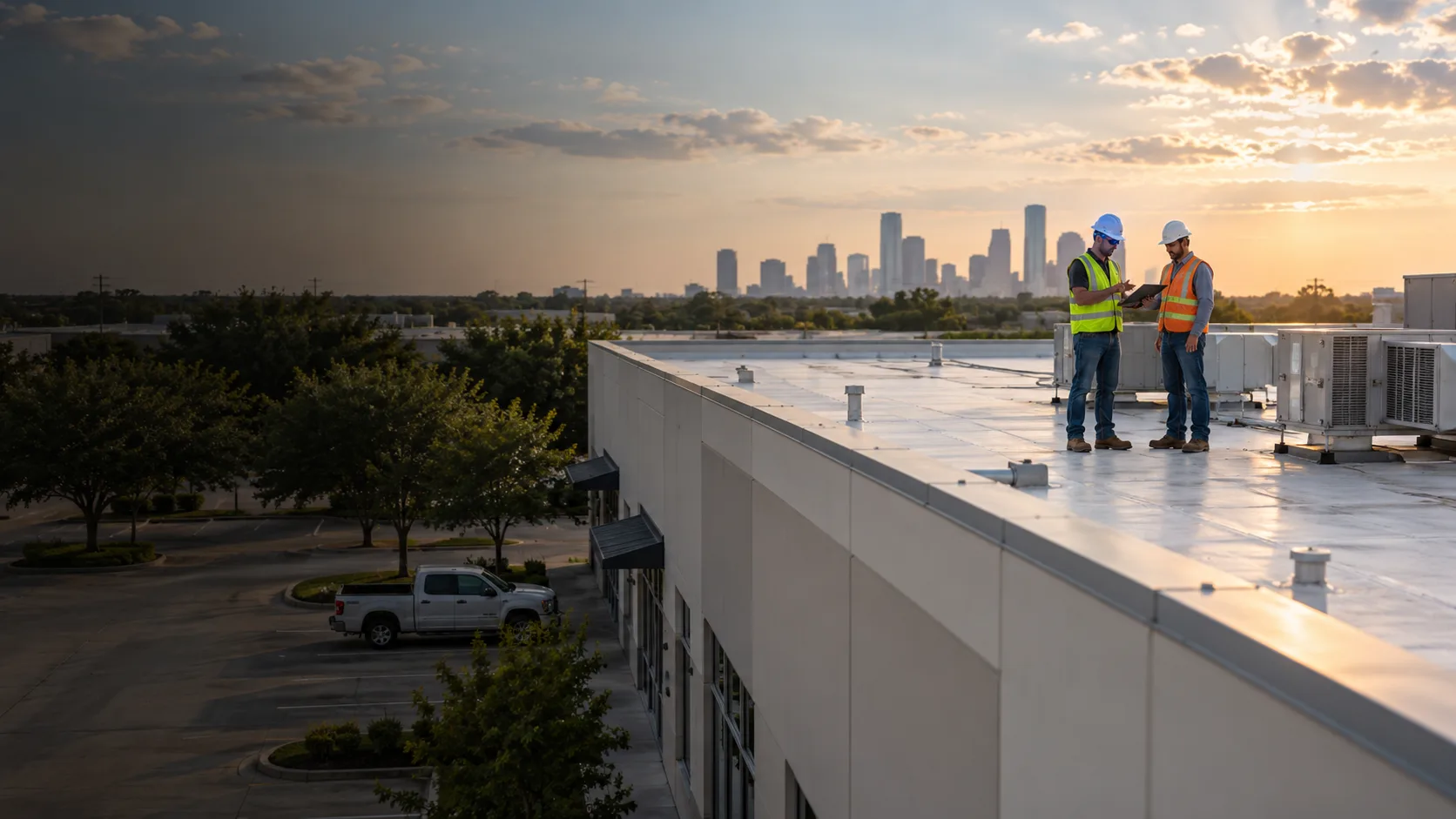
Commercial roof problems come from a lot of directions—age, storm damage, drainage problems, failed seams, flashing, roof penetrations, rooftop equipment, and general deterioration of the existing system. Before recommending any work, we inspect the roof to determine where the problem is occurring, how extensive it is, whether moisture has reached the underlying materials, and whether a repair is practical or a replacement or restoration should be considered. The goal is a sound decision for the building and the budget—not a rushed scope of work.
Every recommendation starts with a look at the actual roof system, drainage, seams, and penetrations.
You'll understand what we found and why we recommend the scope we do—before any work is approved.
You'll get a clear written scope and estimate so there are no surprises once the project begins.
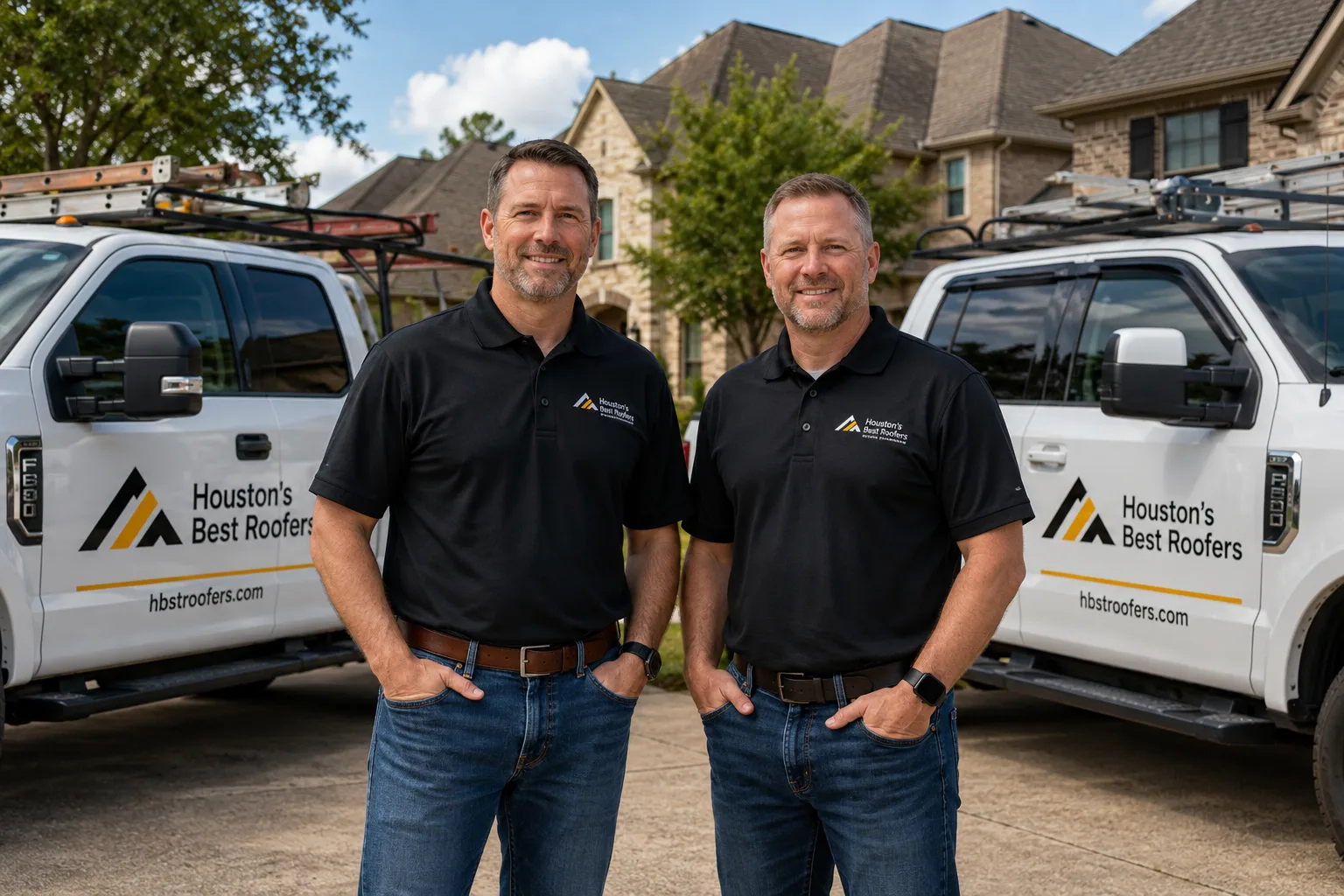
Managing a commercial property? Contact our team or see recent work in our project gallery →
From a single leak to a full roof replacement, we handle the roofing needs of Houston's commercial and industrial properties.
Repair leaks, damaged roofing areas, flashing problems, seams, penetrations, and other localized issues. More on roof repair →
Replace aging or extensively damaged roofing systems when repair is no longer the practical long-term solution. More on roof replacement →
Install commercial roofing systems for new or existing commercial properties where a complete roofing system is required.
Inspect and repair commercial roofing affected by wind, hail, heavy rain, or storm debris. Storm damage help →
Identify the source of water intrusion and address the affected roofing system before it spreads.
Repair, replace, or install commercial metal roofing systems where appropriate. More on metal roofing →
Commercial roof problems usually show up on the roof itself and inside the building. If you're seeing several of these, it's worth an inspection.
If the same problem keeps returning, there may be a larger issue with the roof system rather than a single isolated defect.
Repair, restoration, and replacement each make sense in different situations. The right answer depends on the condition of the existing roof.
Depending on the system and its condition, some commercial roofs may be candidates for a restoration approach rather than a full tear-off. We'll let you know if that's a realistic option for your roof.
We'll inspect the system and explain the practical options before recommending a scope of work.
We work with the commercial roofing systems best suited to Houston's low-slope buildings and climate. The right one depends on your building and existing roof.
TPO is a single-ply membrane roofing system commonly used on low-slope commercial buildings. Its light-colored surface can help reduce solar heat absorption, and welded seams create a continuous roofing membrane.
Best for: Warehouses, retail properties, offices, and other low-slope commercial roofs where a reflective membrane system makes sense.
PVC is another single-ply membrane system used on low-slope commercial roofs. It can be a good fit for commercial properties that need durable seams and resistance to certain oils, grease, or chemicals.
Best for: Commercial buildings where roof conditions or operations require a more chemically resistant membrane system.
Metal roofing can provide long-term durability for commercial and industrial properties and may be appropriate for both low-slope and steep-slope applications depending on the system.
Best for: Commercial properties prioritizing durability, long-term performance, and metal roofing construction.
Commercial roofing costs vary significantly based on roof size, roofing system, access, tear-off requirements, insulation, penetrations, drainage, and the existing condition of the roof. The ranges below are general Houston market estimates, not HBR quotes.
These are general Houston-area market estimates. Actual project pricing depends on the building, roof system, size, access, existing conditions, and final scope of work.
Larger roof areas require more roofing material, labor, and project coordination.
TPO, PVC, and metal roofing have different materials, installation requirements, and costs.
Wet insulation, damaged decking, multiple roofing layers, or deteriorated components can increase scope.
Roof height, equipment, penetrations, staging requirements, and difficult access can affect project complexity.
Existing roofing removal, disposal, drainage corrections, and underlying repairs can affect final cost.
We'll inspect and measure the roof, explain the recommended scope, and provide a written estimate before work begins.
Commercial roofs in the Houston area take on a demanding mix of heat, rain, and storms.
Houston's prolonged heat and strong sunlight can accelerate deterioration of exposed commercial roofing materials.
Low-slope commercial roofs depend heavily on effective drainage. Standing water and recurring drainage problems can expose weak points in the roofing system.
High winds, hail, debris, and wind-driven rain can damage membranes, flashing, edge components, metal roofing, and penetrations.
Commercial roofing is about more than the roof itself. Good project planning helps keep the work organized around an active property.
Before work begins, we understand roof access, staging, building use, rooftop equipment, and project requirements.
We keep the property owner, manager, or facility contact informed about the approved scope and project progress.
We plan roofing work with awareness of tenants, employees, customers, parking, access, and normal property operations.
Single-ply membranes and metal each suit different buildings. Here's how they generally compare—an inspection confirms what fits your roof.
We'll inspect the property and explain the practical options for your roof.
From the first inspection to the finished roof, you'll always know what to expect—no surprises and no pressure.
We evaluate the existing roof system, visible damage, drainage, seams, penetrations, and problem areas.
We explain what we found and whether repair, restoration, replacement, or a new roofing system should be considered.
We provide a written scope and estimate for the recommended commercial roofing work.
We complete the approved work and review the finished roofing system with you.
Need help with a commercial roof?
Schedule an inspection and get a clear, written recommendation before any work begins.
Houston's Best Roofers provides commercial roofing services throughout Houston and surrounding communities, including Harris and Fort Bend counties.
Book an inspection with a local Houston roofing team—we'll assess the roof and explain the practical options for your property.
Commercial roofing cost in Houston varies widely with the roof size, the system, roof access, tear-off requirements, and the existing condition of the roof. As a general market guide, TPO commonly runs about $6–$11 per square foot installed and PVC about $8.50–$13; commercial metal pricing depends on the system. The only way to get an accurate number is an inspection and a written estimate.
It comes down to how isolated the damage is and the overall condition of the roof. A localized leak on an otherwise sound system can often be repaired, while widespread damage, saturated insulation, recurring leaks, or a roof near the end of its service life may point toward replacement. An inspection tells you which is the practical long-term choice.
We work with TPO, PVC, and commercial metal roofing. The right system depends on the building, the roof slope, the operating environment, and the condition of the existing roof, which we assess during the inspection.
Often, yes—depending on the source and extent of the damage. Some leaks are localized and can be repaired directly, while leaks that keep returning or appear in multiple areas can indicate a larger issue with the roofing system that's worth a closer look.
Ponding usually traces back to drainage—roof slope, clogged or undersized drains, building settling, or low spots that hold water after rain. We'd need to inspect the roof to identify the cause; it isn't something to diagnose from the ground.
It depends on the roof size, the system, whether the old roof needs to be torn off, roof access, weather, and the complexity of the project. We'll give you an expected timeline as part of the written scope once we've inspected the roof.
Many commercial projects can be planned around an active property, but it depends on the specifics—roof access, staging, safety, and how the building is used. We evaluate those factors for your project and plan the work accordingly.
Periodic inspections are a good practice, and it's wise to have the roof looked at after major storms or when you notice a leak or drainage problem. Regular inspections help catch small issues before they become larger, costlier ones.
Whether you're dealing with a leak, an aging roof, storm damage, or planning a replacement, we'll inspect the roof and explain the practical options for your property.
Your free inspection request is in. We'll call you shortly.